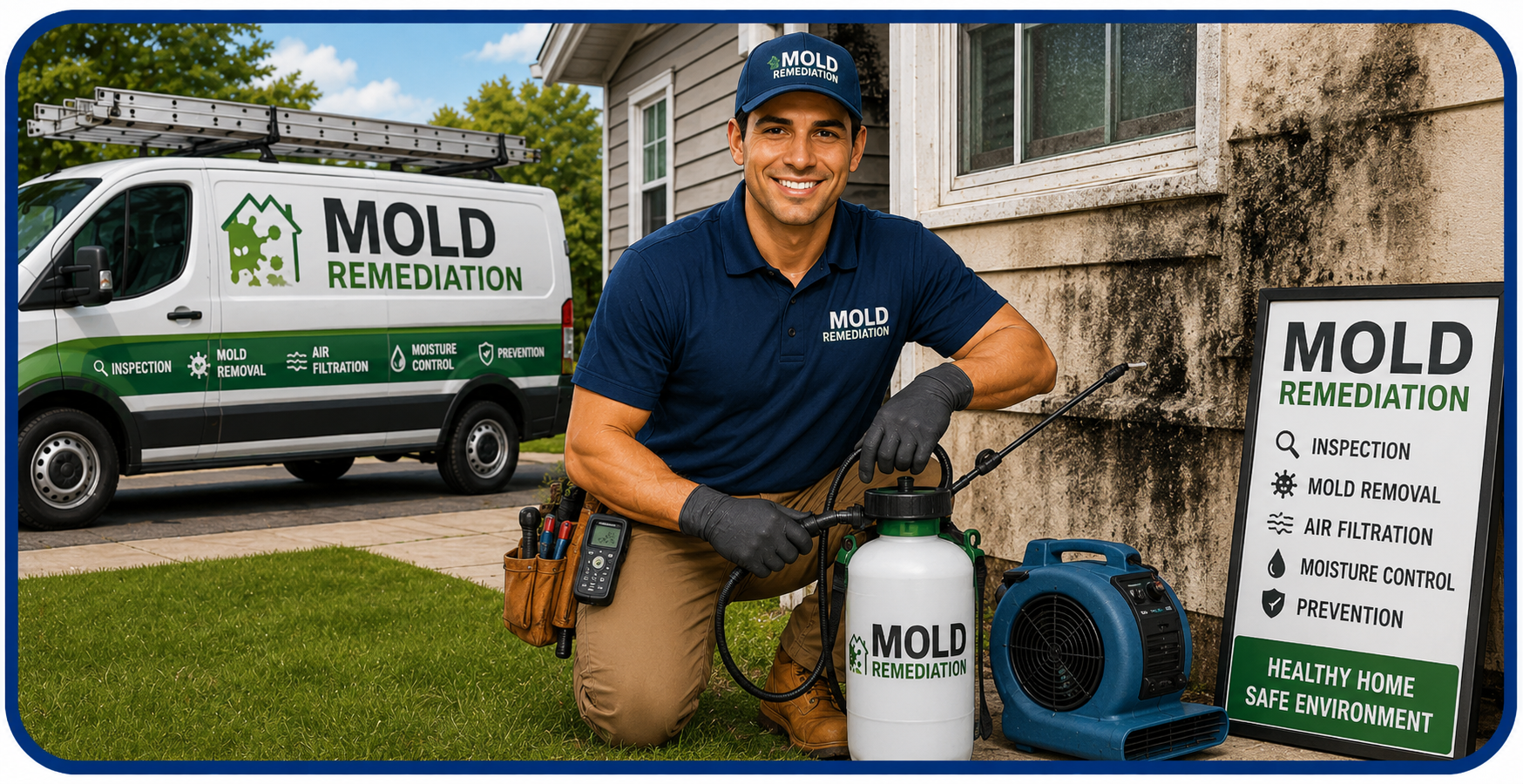
Your crawl space is out of sight but not out of consequence. Mold established in the crawl space travels upward through floor systems into every room above. Our certified team eliminates it and encapsulates your crawl space for permanent protection.
Of all the locations in a residential structure where mold can develop, the crawl space presents a uniquely challenging combination of conditions: it is inaccessible for routine inspection, perpetually dark, subject to ground moisture evaporation rising through bare soil, and connected to the occupied living space above through a porous floor assembly. In Sharpsburg, MD's climate, these conditions allow crawl space mold to establish and expand across large areas of floor joists, subfloor sheathing, and insulation with no outward signs until the contamination has become substantial and the structural components are beginning to show damage.
The mechanism that makes crawl space mold a whole-home problem is the stack effect. As warm air rises and exits through the upper portions of a building, it draws replacement air in through the lowest openings — including gaps in the floor assembly, wire penetrations, pipe chases, and crawl space vents. This air movement carries mold spores from the crawl space into the main living area continuously, contributing to elevated indoor spore counts and, for sensitive occupants in Sharpsburg homes, a range of respiratory and allergy-type symptoms that can be difficult to attribute until their source is identified. Musty odors on the first floor are often the first noticeable signal of an active crawl space mold problem.
The moisture source driving crawl space mold growth in Sharpsburg and throughout Sharpsburg, MD is almost universally ground moisture evaporation from bare or inadequately covered soil floors. Even in the absence of bulk water intrusion, bare crawl space soil releases significant moisture vapor continuously, and when crawl space ventilation is insufficient to remove that moisture, relative humidity climbs to levels where mold growth on organic surfaces above — floor joists, subfloor, wood-fiber-faced insulation — is effectively guaranteed over time. The solution is not simply removing the mold that has developed; it is permanently changing the moisture dynamics of the crawl space through proper encapsulation and, where needed, mechanical dehumidification.
Our crawl space remediation process at 911 Mold Removal addresses this in the correct order: we remove existing contamination first according to IICRC S520 guidelines, treat all structural wood surfaces with EPA-registered antimicrobials, address any drainage or groundwater issues, and then install a continuous sealed vapor barrier system across the floor, walls, and piers of the crawl space — eliminating the soil moisture evaporation that created the conditions for mold in the first place. For Sharpsburg properties where crawl space humidity remains problematic after encapsulation, we install a dedicated crawl space dehumidifier sized for the specific space to maintain relative humidity below 50% year-round.
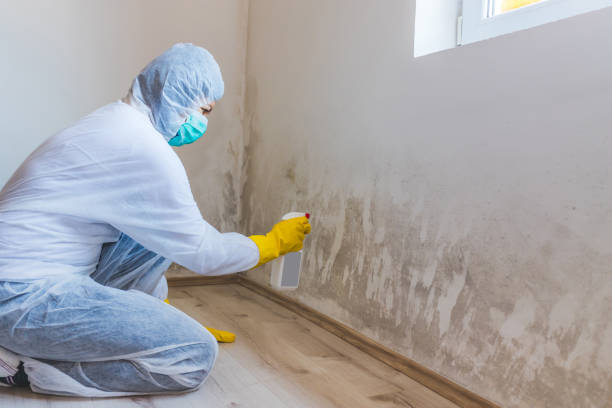
Every service our team performs addresses a specific link in the crawl space mold chain — contamination removal, moisture source control, and prevention of recurrence.
A certified technician enters and fully inspects the crawl space with moisture meters, thermal imaging, and documented photography. We map mold locations, identify all moisture sources, assess structural wood condition, and evaluate existing vapor barrier status. You receive a complete written assessment with findings, photos, and a proposed remediation scope before work begins.
Contaminated insulation is removed and bagged under containment conditions. All mold growth on floor joists, rim joists, and subfloor sheathing is treated with HEPA vacuum removal, wire brushing of affected surfaces, application of EPA-registered biocide, and application of an encapsulant coating that seals and protects the treated wood surfaces against future mold growth.
Following remediation and clearance testing, we install a continuous 20-mil polyethylene vapor barrier system across the crawl space floor, lapped up the walls and over the piers, and mechanically attached and sealed at all seams, penetrations, and perimeter walls. This sealed system eliminates soil moisture evaporation, the primary driver of elevated crawl space humidity in most Sharpsburg homes.
Where bulk water is entering the crawl space through foundation cracks, failed drains, or inadequate grading, encapsulation alone does not solve the problem. We address the water pathway: crack injection, sump installation, interior or exterior drainage corrections, and grading recommendations to redirect surface water away from the foundation before the encapsulation barrier is installed.
For Sharpsburg properties where crawl space humidity cannot be adequately controlled by encapsulation alone — typically in areas with high ambient humidity or where vented crawl spaces cannot be fully sealed — we install dedicated crawl space dehumidification equipment sized to maintain relative humidity below mold-growth threshold levels year-round. Proper equipment sizing and drainage planning are included in the installation scope.
Extended mold and moisture exposure in crawl spaces sometimes causes structural damage to floor joists and subfloor sheathing — wood decay, section loss, and loss of structural bearing capacity. Our inspection identifies any structurally compromised components. Where wood replacement or sistering is needed, we coordinate with licensed structural contractors to ensure the floor system is fully restored before the new vapor barrier is installed.
A structured four-step dispatch process that moves from your initial call to a documented, encapsulated result with no gaps or coordination surprises.
Call +1-844-692-0486 anytime. A specialist captures your Sharpsburg property details and dispatches a certified crawl space technician for a same-day or next-morning inspection in most cases.
Full crawl space entry and inspection with moisture mapping, thermal imaging, and photo documentation. You receive a written scope of work and complete estimate before any remediation begins.
Mold is removed under proper containment, surfaces are treated and sealed, water issues are corrected, and a fully sealed vapor barrier encapsulation system is installed. Dehumidification equipment is added where indicated.
Air quality testing confirms clean results. You receive a complete documentation package including inspection photos, scope, lab results, clearance certificate, and warranty information for the installed encapsulation system.
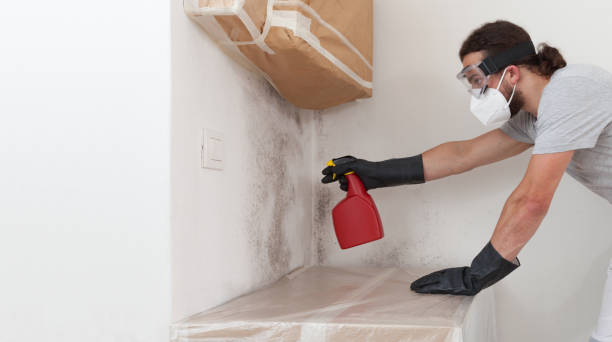
Simply treating the existing mold and leaving the bare soil floor in place virtually guarantees regrowth within one to two seasons. Encapsulation changes the fundamental moisture dynamics of the space and prevents mold from having the conditions it needs to return.
A sealed vapor barrier stops ground moisture evaporation — the primary humidity driver in most Sharpsburg crawl spaces.
Sealed crawl spaces dramatically reduce cold floors in winter and musty odors year-round for the living spaces above.
HVAC equipment and ductwork in crawl spaces lasts longer in a dry, encapsulated environment versus an uncontrolled humid space.
Our home inspector flagged significant mold on the floor joists and said the smell inside the house was likely coming from the crawl space. 911 Mold Removal came out the same week, documented the full extent of the problem, and completed the remediation and full encapsulation in two days. The musty smell in the house was gone within the first week. The difference has been remarkable.
We were selling our home and the buyer's inspection found mold in the crawl space. I panicked. 911 Mold Removal came out quickly, gave me an honest assessment of what was actually there versus what we could safely leave, did the remediation and encapsulation, and provided full documentation for the buyer's agent. The deal closed on time. Worth every dollar.
I had gotten quotes from two contractors who both wanted to just spray the joists and call it done. 911 Mold Removal was the only company that explained why that approach fails within a season without addressing the moisture source, showed me the humidity readings in my crawl space, and proposed the full encapsulation. I paid more than the spray quotes but I have not had a recurrence in two years.
Research by building scientists has shown that a significant portion of the air in the first-floor living space of a home with a vented crawl space is drawn from that crawl space — estimates range from 30 to 50 percent in some building configurations. If the crawl space has active mold, this air movement continuously carries elevated mold spore concentrations into the living area through floor gaps, duct leaks, and the stack effect. Occupants sensitive to mold — those with allergies, asthma, or immune vulnerability — will typically experience symptoms throughout the home, not just near the crawl space access. Addressing the crawl space mold at its source is the most effective way to reduce whole-home indoor mold levels.
Sealing crawl space foundation vents is a standard and recommended component of crawl space encapsulation in most Sharpsburg, MD climate zones. The traditional code requirement for cross-ventilated crawl spaces was based on the assumption that outdoor air would dry the crawl space — but in humid climates, outdoor air in summer months is actually more humid than a properly managed crawl space interior, making vented crawl spaces counterproductive during the periods of highest mold risk. Sealed crawl spaces combined with a continuous vapor barrier and, where needed, mechanical dehumidification or conditioned air supply, consistently outperform vented crawl spaces for moisture control in research comparisons. Current building codes in most states explicitly allow and encourage this approach.
A typical crawl space mold remediation and encapsulation project in a single-family home in Sharpsburg takes one to three days depending on the extent of the contamination, the size of the crawl space, and the scope of any drainage corrections needed. Small crawl spaces with limited mold and no drainage work can sometimes be completed in a single day. Larger crawl spaces with extensive mold on the floor joists, significant insulation removal, and a full encapsulation installation typically require two to three days. We provide a specific timeline estimate as part of the written scope and proposal at the conclusion of the inspection, before any commitment is made.
When remediation is performed correctly and the moisture source is permanently addressed through encapsulation, recurrence is very unlikely. The specific failure mode for crawl space mold recurrence is always an unaddressed or inadequately addressed moisture source: bare soil left uncovered, vents left open, drainage problems not resolved, or dehumidification equipment sized too small or not maintained. When all of these conditions are properly handled — which our comprehensive remediation and encapsulation scope is designed to ensure — the treated wood surfaces in the crawl space no longer have the moisture supply mold requires to reestablish. We also apply an antimicrobial encapsulant coating to treated structural wood surfaces as an additional layer of protection.
Coverage for crawl space mold under homeowner's insurance in Sharpsburg, MD depends on the cause and whether the policy includes mold coverage as a rider. Mold resulting from a sudden covered event — a burst pipe, a sudden appliance failure, or storm-related water intrusion — may be covered under the underlying water damage claim. Mold resulting from long-term moisture accumulation, condensation, or gradual seepage is typically excluded as a maintenance issue. We provide thorough documentation of the moisture source and cause analysis as part of every project, which is important both for claims that may be covered and for establishing the documentation trail for any real estate disclosure needs. We recommend reviewing your specific policy language and consulting with your agent about your current coverage.
Don't wait for it to spread to the floor joists and subfloor above. Our certified team responds throughout Sharpsburg and all of Sharpsburg, MD — 24 hours a day, 7 days a week.