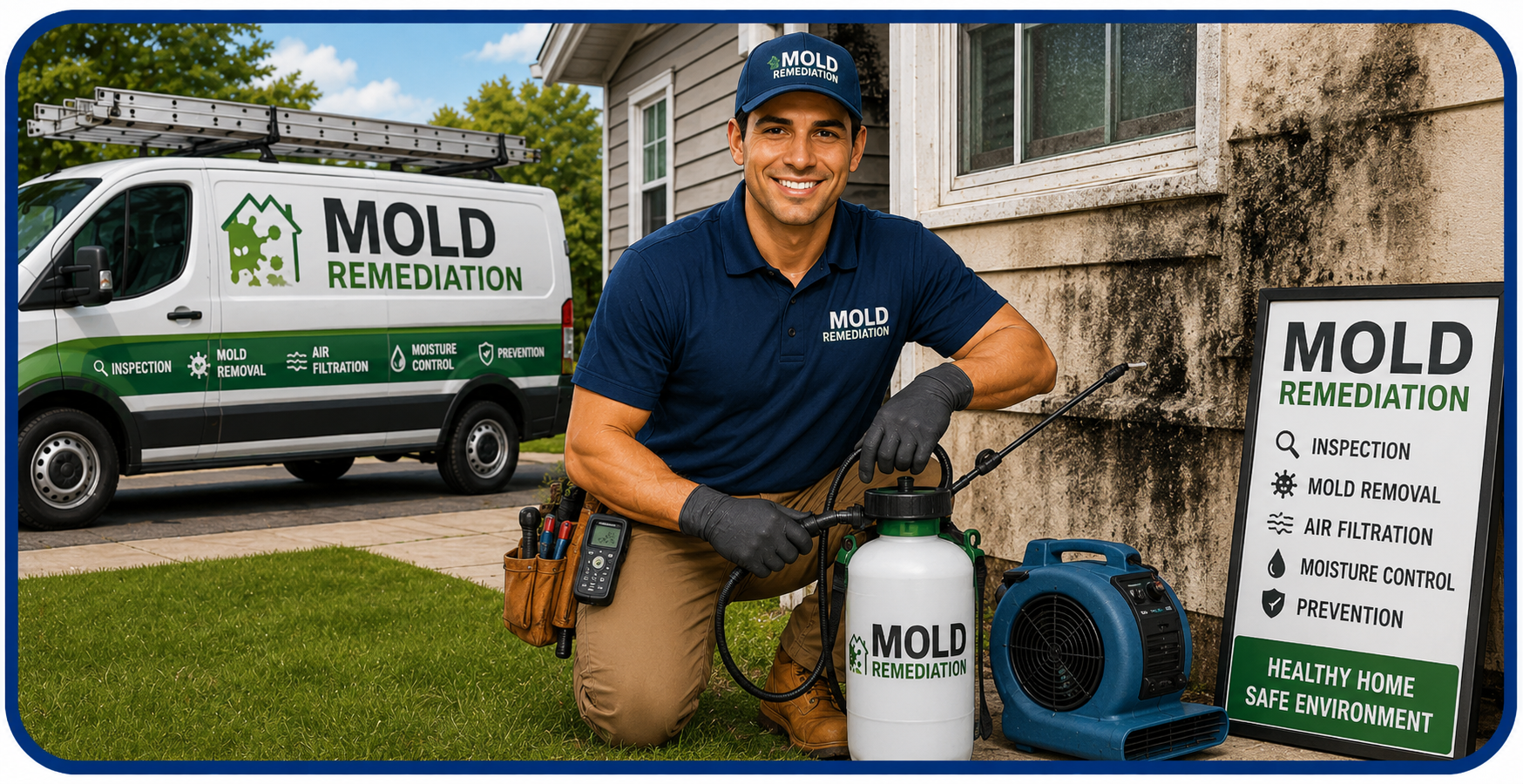
Mold in a commercial property is a liability, a regulatory concern, and an operations problem. Our IICRC S520-certified commercial remediation teams serve businesses, property managers, and facilities operations throughout Union and Union, MI — with the documentation standards, containment protocols, and insurance-ready reporting that commercial projects require.
HVAC-related mold, roof leak damage, and plumbing failures in occupied commercial space handled under proper containment during business hours or off-hours as required.
Unit-by-unit and common area remediation for property managers throughout Union, MI, with documentation packages for tenant communication and regulatory compliance.
Enhanced protocols for sensitive occupancy types, including HEPA air scrubbing, negative pressure containment, and third-party clearance testing for high-accountability projects.
Large-footprint commercial mold remediation with the crew capacity and equipment to address high-square-footage contamination on compressed timelines.
Commercial mold remediation differs from residential work in scope, documentation requirements, stakeholder complexity, and regulatory exposure. When a business property in Union or anywhere in Union, MI has a mold problem, the remediation decision-making involves property owners, facility managers, insurance carriers, tenants, and in some cases state or local regulatory bodies — each with distinct documentation and communication needs. An underdocumented or improperly completed commercial remediation creates ongoing liability exposure that a well-executed one eliminates.
The moisture sources that drive commercial mold differ by property type. In office buildings, the most common causes are HVAC condensate issues, roof membrane failures, and plumbing leaks in restroom and break room cores. In multi-family residential properties, unit-to-unit water migrations — from washing machine failures, toilet overflows, and bathtub overflows in upper-floor units — produce concentrated mold problems that often affect multiple stacked units and common walls. In warehouses and industrial properties, roof leaks over large footprints and condensation on metal building envelopes can produce extensive mold across broad areas of stored goods, racking systems, and concrete floor slabs. Each of these scenarios requires a tailored assessment and remediation approach rather than a one-size residential protocol.
Our commercial remediation process begins with a site assessment that maps the full extent of contamination, identifies all moisture sources, and produces a formal remediation plan with containment specifications, work sequence, air quality management protocol, and completion criteria. For occupied commercial properties in Union, the plan addresses occupant protection and the phasing of work relative to business operations — whether that means after-hours or weekend scheduling, progressive wing-by-wing containment, or temporary relocation arrangements for the most directly affected areas. We do not apply residential-scale thinking to commercial projects.
Post-remediation clearance testing by a qualified industrial hygienist is standard on all commercial projects we complete. The clearance report, combined with our project documentation — scope, daily reports, photographs, biocide application records, and waste manifests — constitutes the project close-out package that property owners and managers need for insurance resolution, tenant communication, and regulatory compliance. In Union, MI, this level of documentation is increasingly expected as standard of care for commercial remediation, and it is what we deliver on every project regardless of size.
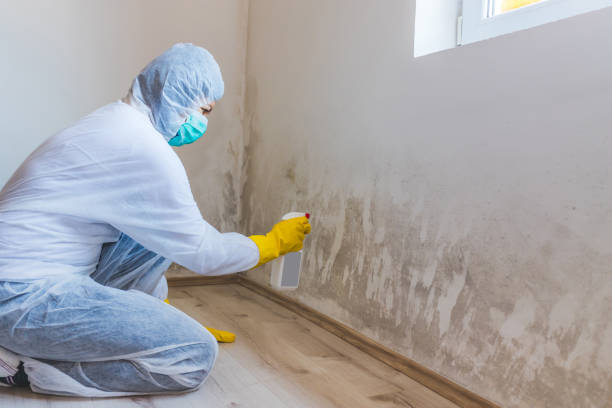
HVAC mold, roof leak damage, and occupant-sensitive containment for Class A through Class C commercial office properties.
Multi-unit water migration events, common area mold, and documentation for property managers and management companies.
Enhanced HEPA protocols for occupied school buildings and campuses, with scheduling around academic calendars.
Fast-turnaround remediation for retail, restaurant, and hotel properties where extended closures are not operationally viable.
Large-footprint remediation for manufacturing facilities, distribution centers, and storage properties throughout Union, MI.
Public accountability documentation, prevailing wage compliance where applicable, and regulatory-ready reporting for municipal clients.
Medical office buildings and outpatient facilities require enhanced containment and clearance documentation standards that we are equipped to meet.
Pool buildings, clubhouses, parking structures, and laundry facilities for homeowner associations and condominium properties in Union and Union, MI.
Comprehensive commercial remediation services from initial assessment through third-party clearance and project close-out documentation.
A qualified project manager conducts a comprehensive facility inspection, produces a written formal remediation plan with containment specifications, work sequence, and completion criteria, and provides a cost estimate for owner and insurance carrier review before any work begins.
All commercial mold remediation is performed under engineered negative pressure containment to protect unaffected areas of the building and building occupants. Containment specifications are documented and verified before work begins and maintained throughout the project.
We have the crew capacity, HEPA equipment, and commercial-rated biocide supplies to handle large-footprint commercial mold projects on timeline. Contaminated building materials are removed, structural surfaces are treated with EPA-registered antimicrobials, and HEPA air scrubbing is maintained through project completion.
Complete commercial-standard project documentation including moisture cause analysis, scope of work, photographic evidence, biocide application records, waste manifests, and clearance test results — formatted to support commercial insurance claims and satisfy adjuster, legal, or regulatory requests.
Third-party air quality clearance testing confirms that mold spore counts in treated areas have returned to acceptable levels before containment is removed and the space is turned back over to building occupants or tenants. Clearance reports are included in every commercial project close-out package.
We identify every moisture source driving the commercial mold problem — HVAC condensate, roof membrane failures, plumbing leaks, envelope deficiencies — and coordinate directly with mechanical, roofing, and plumbing contractors to ensure all sources are resolved before the restoration phase begins. We do not proceed to restoration over an active moisture source.
A structured four-phase process designed for commercial project accountability — from initial dispatch to documented, tested, closed-out results.
Call +1-844-692-0486 24/7. A commercial project manager is dispatched to your Union property for assessment, typically the same day for urgent situations. Initial response is followed by a formal written remediation plan.
Comprehensive building inspection, moisture mapping, and contamination scope determination. You receive a written remediation plan with containment specifications, work sequence, timeline, and full cost estimate before commitment.
Negative-pressure HEPA containment, material removal, surface treatment, moisture source correction, and ongoing air quality monitoring throughout the project. Daily reports and photographic documentation throughout.
Third-party air quality clearance testing, full project close-out documentation package, and coordination with your insurance carrier, property management, and any applicable regulatory bodies for final sign-off.
We manage a 120-unit apartment complex in Union and had a significant mold situation in a basement mechanical corridor and multiple affected units above a pipe failure. 911 Mold Removal handled the entire scope — assessment, remediation, documentation for the insurance carrier, and communication templates for the affected tenants. Their project documentation was exceptional. Our property insurance claim resolved without dispute.
Our office building had a roof membrane failure over the summer that we did not catch until fall. By then there was extensive mold in the ceiling tiles and wall cavity of two tenant suites. 911 Mold Removal phased the remediation around tenant business hours, completed the affected suites in sequence with minimal disruption, and provided the full clearance documentation we needed for the tenant lease compliance process. Professional operation from start to finish.
We own a warehouse in Union that had a large section of roof damage from a storm. The water intrusion went undetected over the winter and we had mold across a significant portion of the concrete block wall and the bottom of the roof deck. 911 Mold Removal mobilized quickly with the crew size needed for that scale, completed the work on an accelerated schedule to avoid further inventory impact, and their final documentation package was thorough and well organized.
Commercial property owners and managers in Union, MI have a duty of care to provide safe premises for tenants, employees, and visitors. Mold in a commercial building that is known or should have been known to the property owner creates potential liability exposure across multiple areas: tenant claims for property damage or health impacts, employee claims in workplaces, and claims from visitors or customers. Prompt, documented, professionally completed remediation — with clearance testing confirming completion — is the standard of care that demonstrates responsible management of a known mold condition and limits that exposure. An undocumented or improperly completed remediation provides significantly weaker protection. We recommend working with your legal counsel and insurance carrier throughout the process, and we structure our documentation to support that coordination.
It depends on the location, extent, and phasing of the remediation work. Negative pressure HEPA containment is designed specifically to allow work to proceed in adjacent areas of a building while occupied spaces remain accessible. In many commercial scenarios — especially wing-by-wing or floor-by-floor phasing in office buildings — affected areas are isolated under containment and unaffected tenant spaces continue normal use. In situations where the contamination is widespread, where HVAC systems serving occupied spaces are involved, or where the specific occupancy type demands a higher precautionary standard (healthcare, early childhood education), relocating occupants for the duration of the project may be the appropriate approach. We provide a specific recommendation on this question in every formal remediation plan, based on the actual conditions of the project.
Our 24/7 commercial dispatch line at +1-844-692-0486 connects to a certified project manager who can typically have an assessment team at your Union property within hours for urgent situations. Full remediation mobilization — crew, HEPA equipment, containment supplies — is coordinated immediately following the assessment and plan approval. For situations involving active water damage or imminent tenant or regulatory pressure, we prioritize commercial responses and can accelerate from first call to active remediation in under 24 hours when the scope warrants emergency priority.
At minimum: the formal remediation plan, all daily work reports and photographic documentation, biocide application records, waste manifest copies, the clearance testing report from the industrial hygienist, and any moisture cause analysis report. For multi-family properties, documentation of tenant communication related to the mold discovery and remediation is also important. This package serves multiple future purposes: insurance claim support, tenant dispute resolution, future real estate transaction disclosure, and defense of any liability claim related to the mold condition. We deliver a structured close-out package in digital format at the end of every commercial project, organized for long-term record keeping.
Commercial property insurance in Union, MI typically covers mold remediation when it results from a covered peril — a sudden and accidental water event such as a burst pipe, storm water intrusion through roof damage, or fire suppression system activation. Mold resulting from long-term moisture accumulation, gradual building envelope deterioration, or HVAC maintenance failures may be subject to coverage limitations or exclusions depending on the specific policy language. Many commercial policies include either mold coverage riders or explicit mold sublimits. We recommend reviewing your policy's mold-related language with your insurance broker at the time of the event, before beginning remediation. Our documentation is structured to support commercial claims in any coverage scenario.
Protect your tenants, your liability, and your insurance claim. Our certified commercial team responds throughout Union and all of Union, MI — 24 hours a day, 7 days a week.